You'll actually look forward to your morning commute. Life is calling. How far will you go? Learn more about the Peace Corps

Monday, March 14, 2011

A Bamako baptism


The taxi starts and stops in the heart of frenzied rush hour traffic. Motorcycle drivers pull precariously close to our yellow Mercedes taxi and make wordless supplications to our cab driver to join their game of Tetris. The rumble of their engines pours through our open windows as we try to catch a breeze in the steamy, afternoon heat. However, instead of cool breezes to soothe us, our sweating faces are met with a stifling wind that feels more like we have opened the door to an oven. I turn my head to see what is happening beyond the chorus of purring engines and see women weave quickly between the corral of impatient cars while balancing market wares on their heads and babies on their backs à la Africaine.

Deeba Cissoko, a cousin of my friend Worokia, sits beside me in the backseat of the cab in her raspberry bazin complet with light pink – and elaborate – embroidery and looks unfazed by the commotion surrounding us. She is a 6th year medical student at the University of Bamako where she is studying to be a general practitioner. She has a smile that makes me feel welcome and a laugh that makes me want to share in on the joke. I compliment her intricate bazin complet that positively sparkles in the gentle afternoon sunlight peeking over Koulouba hill where Amadou Toumani Touré (ATT) resides in his presidential palace. She looks down and laughs to the door, returning the compliment as she pulls a packet of tissues out of her clutch and gently dabs at the perspiration collecting along her hairline. It is Friday afternoon and we are sharing this cab headed towards the grande marchée to attend the baptism of Worokia’s baby. How Worokia and I, and subsequently Deeba and I, have come to know each other is a story longer than a Bamako commute from Kalabancoura to Hippodrome in a Sotrama. I would like to think it is a story worth telling all the same.

‘An ka taa!’ Haidara calls out from the white Land Rover parked in the PHARE compound. It is early February and we have spent the morning hurrying up to wait as we prepare for our trip to Segou to man a USAID/PHARE table at the music festival. Booth materials in the trunk and gas in the tank and we are finally ready to hit the road. As I buckle up Haidara coaxes the engine into first gear and says ‘before we leave we need to go by my house and pick up my bag.’ Are you serious? I think to myself. We spent all morning waiting to leave and now we are backtracking into what is sure to be a traffic-filled neighborhood to pick up your bag for this trip you knew we were taking the night before?? But just as quickly as I make these silent inquiries I admonish myself for being so hasty. Daylight hours lay before us and I am sitting in the front seat of an air-conditioned Land Rover. Things could be worse.

Haidara, one of the 8 drivers for PHARE, pulls our squeaky clean SUV beside a rusting, red metal door that looks like all the others on this cobblestone street. We lock each of the doors by hand, the automatic lock long broken on our trusty vehicle, and call out ‘aw ni ce!’ to the folks scattered throughout the interior of his family’s compound. Haidara’s mother calls out urgently to me ‘Toubabu!! Ca va?! Ca va bien?! Toubabu!’ while Haidara’s wife shushes her with a belly laugh as she directs me upstairs.

In the living room where I have been directed to sit and wait, Haidara’s younger sisters and nieces, who are about my age, lounge in their pajamas on overstuffed couches as they watch television and make and receive phone calls from fancy looking telephones. I sit awkwardly on one of the uncomfortable, empty chairs and feel, for once, overdressed in this room of pajama-clad women. Toddlers and teenagers wander in and out and look at me with question mark faces. After establishing that I speak Bambara, the rigidity of the room melts away. ‘Eh, I ye bamana-muso deh!’ they decide while choosing from among a selection of hair weaves a man has brought by on his bicycle. ‘Awo, n sonna,’ I say. I cannot help but laugh and agree. ‘When do you come back from Segou?’ one of the girls asks. ‘Saturday afternoon. In ch’allah,’ I reply. If God is willing. They nod their agreement and one of the sisters gets up to retrieve something from her room. ‘You must come to our koromuso’s wedding on Sunday. It is at the National Museum at 9 a.m. and we’ll just cry if you don’t make it,’ declares the sister-who-went-to-retrieve-something. She hands me an invitation printed on shiny paper with a pink satin bow tied through the top. I read in a script-y font about the joyous nuptials about to take place at one of my favorite places in Bamako. The bride-to-be is sleeping in the one of the adjacent bedrooms but nonetheless, without knowing her or really her family, I quickly agree ‘Ni Allah sonna-ma, n be na.’ If God is willing, I will be there.

The morning of the wedding I zip into a newly tailored dress and slip on a pair of shiny, black, peep-toe wedges. After twirling once or twice in front of my full length mirrors I step over my laundry from a week spent in Segou, collect my ID and some CFA and I am out the door. ‘Djelika, I para-la deh!’ Ma calls out as I pass her downstairs – you look good! I pick up a paté on the side of the road and munch on my fried breakfast treat as I walk with purpose, and try to look like a natural in my towering heels, towards the gates of the National Museum. I check my watch – it is 9:03 and, certainly for Mali, I am just on time. I scan the grounds for a wedding party and spy white satin and lace not far in the distance. My invitation in hand – it says after all, par invitation seulement – I approach the wedding party and ask for Fanta Haidara – the bride-to-be I have never met. The sister of a group of women I barely know.

΄Fanta? No, this is not Fanta΄s wedding,’ says one of the many on-lookers. ‘Come and take a picture with us, though. It will be a bon souvenir, quoi,’ the family implores. I take a picture with the bride, whose name I do not know, and her troupe of cotton-candy-colored-bazin clad bridesmaids and continue my quest to find Fanta Haidara – the bride for whom I have gotten up this early on a Sunday.

Seeing no other wedding parties throughout the park or museum, and after confirming with the guards there are no other weddings parties presently on the grounds, I content myself to watch the leaves fall as I sit on one of the many benches in the National Park which is connected to the museum. I periodically take a tour and check if any of Fanta’s wedding party has arrived. I have no one in the family’s phone number, not even Haidara’s, but the guards confirm that yes, Fanta Haidara is having a wedding here today. At 10:30 I spy a woman, entering the museum and dressed to impress, and follow her trail. ‘Are you here for Fanta’s wedding?’ I ask. ‘Yes! And I rushed to get here!’ she said, out of breath and with her head wrap slung over her shoulder waiting to be tied. Rushed? I think to myself… You’re an hour and ½ late… Brushing aside my American notion of time, we seek out the reception area and receive yet another confirmation that yes, Fanta’s wedding will be here but no, the wedding party has not yet arrived. My new partner-in-waiting and I decide, since we have the time, to take a walk around the Park. I learn her name, Worokia, and that she is 8 ½ months pregnant, something I could not tell at first glance due to her large, flowing complet. She talks about her increasingly large belly and some of her fears and delights as she looks forward to the birth of her first child. In the States I am used to seeing very pregnant women and hearing them share stories about birthing classes they are taking and whether they have decided to breast-feed or not. Here in Mali, however, pregnancy is more of a taboo topic and something you do not talk about for fear of jinxing the pregnancy. All that to say – hearing Worokia speak so openly about her own impending ‘accouchement’ took me aback and facilitated our speedy friendship. Once Fanta’s wedding party finally arrived – at 12:30 p.m. and 3 ½ hours after the indicated start time on the invitation – Worokia, a cousin of Fanta’s, took me under her wing and introduced me to all the family I still did not know and made sure I had enough to eat and drink and a shady place to sit. I should have been doing those things for her considering her baby bulge!

And all of that brings us to how I find myself in a taxi with Deeba on a Friday afternoon heading towards the crowded grande marchée for the baptism of a baby of a woman I just barely know who I met at the wedding of a woman I had never met.
Worokia (right) and a friend holding her baby girl
Deeba takes my hand as we enter the narrow passageway of a home nestled in the heart of one of the biggest markets in Bamako. Old men sit outside on low-lying benches, waving their greetings to passers-by. Women hawk sweet potato fries and fried plantains from even lower-lying stools positioned behind tables covered with shiny metal serving trays of their afternoon treats. While the entry-way to this home is narrow – the crowd that awaits us conjures even more claustrophobic fears of where I would go were a fire to break out. Women and children, dressed in the crispest and waxiest bazin to be found, sit on all varieties of seating arrangements. Benches, plastic string chairs, stools, woven mats, metal chairs – a rainbow of seats squeezed into all available spaces. Worokia sees Deeba and I enter and waves me over to join her on her mat. My jaw drops at her make-up and outfit. Layers of tulle, eye-shadow and bazin before me – I barely recognize my new friend from the last time I saw her at Fanta’s wedding. I lay down gifts – fabric, soap and a baby outfit – at Worokia’s feet and squeeze out my own seat between an already towering pile of pagnes and boxes of safiné. Settled in, I let my eyes wander and am wowed by the glamour of the occasion.

I quickly scan the compound and estimate there are over 200 women and children – the only men a videographer and a drummer – crammed into this prime real estate with a communal space measuring maybe 50x100 feet. The women all clutch large handbags made from various reflective, synthetic materials on their laps and the children sport too-large-for-their-faces sunglasses and freshly pressed toddler clothes. I am one of maybe 2 other women in the compound wearing simple wax fabric – the rest of the crowd opting instead for the much more expensive and lustrous bazin option. And while I had selected one of my best complets this morning, I am starting to feel very plain-jane in this sea of shine.

Out of the sea of shine, one woman stands up and starts to shout. The praises of the griot have begun and I prepare myself to hear the accolades of Worokia and her new baby girl – as well as those wealthy enough to feed the mouth of the griot. As the praises begin, so does the trail of money between those being praised and those delivering the praises. Crisp 1,000, 2,000, 5,000 and even the occasional 10,000 CFA bills, fresh from the bank, are passed over heads and hands and into the expectant palms of the griots – the one griot having now turned into 4 or 5.
Yay for me!  Griot stands behind with her megaphone
As praises continue from crowded corners of the compound, friends and family of Worokia count and recount the gifts received. Pagnes, soap, cash. ‘Nin waari boora Faransi!’ shouts one of the griots as she shakes 50,000 CFA above her head. There is even money coming from France. A Wall Street fervor coats family member’s voices as they cry out the mounting tally of presents. ‘50 pagnes,’ a sister cries! ‘70 pagnes,’ a griot shouts! I am having a hard time following the series of praises and money tallies while food is simultaneously passed around and am thankful when Deeba waves to me that a chair has opened up next to her. I pat Worokia’s hennaed foot and slowly unfold my legs from underneath me on the mat.
Just a little further... a griot reaches to receive some crisp CFA from Worokia after singing her praises

The final count of gifts puts Worokia, and her new baby, 70 pagnes (over 730 feet of fabric) the better and over 500,000 CFA (over $1,000 USD) richer. I keep asking Deeba to repeat the cries of the griots – their Bambara mumbled and jumbled through the crackling sound system and my ears untrained to catch much beyond the beginnings of the blessings ‘Allah ka…!’ – May God....
  
counting the bounty!
 The ‘fitiri’ call to prayer – the sunset prayer – echoes from a mosque nearby and reverberates throughout the market and into the compound where we are celebrating the birth of Worokia’s ‘sirani’ – her first baby. The pigeons, just moments before enjoying the cries of the griots and the crumbs of rice and meat left by absent eaters, scatter to another post, another family’s celebrations to find another roost to rest.

At baptisms in village, where I spent my first two years in Mali, I would offer the same soap and fabric to a new mother as I did to Worokia. If there was an official baptism, we would share rice and sauce with the women of the village and those same women would offer what they could monetarily to the new mother – just like at the baptism for Worokia’s baby girl. 100 CFA (about 25 cents) was an average donation – 200 CFA was generous.

The per capital income for a Malian, according to the State Department, is $470 USD and a skilled laborer’s annual income is $1,560 USD. There are more than a few shock factors present in Worokia’s Bamako baptism equation. First – the average income of a skilled laborer in Mali. Even with a much lower cost of living than say, in the States, that is not a lot of money to feed a family and live in a city. Second – that Worokia received more in one day than what most Malians make in a year. Thirdly, and to me the most shocking, is the incredible disparity between what a woman in village receives at your average baptism and what a woman in Bamako can receive. You know what is also hard to swallow? This disparity in income and standard of living frequently exists within Bamako – just next door a baptism may be taking place similar to those in village.
Worokia's 'sirani'
I wave goodbye to Worokia and Fanta Haidara’s sisters who are also in the mix of attendees. The calls of the griots become less frequent and family and friends begin to file out. I catch the videographer’s eye as I navigate the maze of chairs and folds of fabric and knees on my way out. He clicks on his hand-held light to illuminate my shining face in front of his lens as night gently falls around me. ‘Allah ka balon!’ I yelp into his yellow light. May your baby get big! ‘Allah ka den cekani waati be!’ – May your baby always be beautiful. ‘Allah ka lamosidi a somogo ma,’ I continue – may the baby’s parents live long to see the baby grow up. I have run out of blessings and dusk has turned to nightfall. The camera clicks off and I slip out the narrow passageway I used to enter. Women tease me as I leave – ‘When will we be celebrating the birth of your first baby?’ they call out. I smile and wave down a taxi. ‘Allah ka yira an la’ I call back. May God show us the day! While it will take awhile to process the extravagance of the baptism for Worokia’s first baby – the birth of a baby is reason for celebration all the same. My only regret from the day? Amid the cries of the griots and the money tallies shouted by family and friends – I did not catch the baby girl’s name.


Listen to a griot shout Worokia and her baby girl's praises

Where did you come from??  A griot sings praises from a doorway in the compound
Filming the show

Thursday, March 10, 2011

Top 10 on the 10th

These sunbeams attempt  to look harmless as they cast their treacherous rays on these beds of lettuce in Bamako but beware.  Harmless they are not! 
  
On Sunday, as Ma prophesied last month, I bathed 4 times.  No, I had not been engaging in hard, manual labor.  Nor had I even exercised - though both are interesting ideas and ones to which I will contribute extensive thought.  No, my friends and family, hot season in Mali is upon us.  For those among you who have had (what I hope to be) the extreme delight of visiting, or living in, Mali - you know what I'm talking about.

Sweat creeps out of your pores before you've finished drying off from your shower.  Stifling, heavy air on public transport that, even though you have a fan, leaves you sitting in stifling, heavy air.  Hormonal electricity  turns on and off on a whim.  You finish drinking a liter of water from your Nalgene and find yourself looking longingly at the empty bottle in your hand wondering where that liter of sweet, cool liquid has gone and where the next liter will come from.  

Yes, dear loved ones back in Ameriki or at least north of the Sahara desert and south of the equator, hot season in Mali is here.  While you enjoy the gentle shifting of the seasons from a wrap-around porch or sip ice-cold lemonade while watching flower buds morph into spring, the cool from the breezes has been ripped cruelly from my Malian nights and been replaced by dust storms and parched plants.  

Wouldn't it be great if there was an open fire hydrant for these neighborhood girls (and me!) to run through??

But don't think it's all sweat and lots of tears - there are some good things about this time of year!  In that spirit, I would like to give this year's Malian hot season a special welcome with a top 10 list.  Living in Bamako, I imagine my third hot season in Mali will be a little different from the past two spent 'en brusse'.  Well, at least I hope it will be a little different.  I'll get back to you in a few months.  

In no particular, but very likely sub-consciously particular, order - my Malian hot season top 10:
   
1. Juicy, sweet Mangoes
2. Frozen hibiscus tea
3. An air-conditioned office
5. Swimming pools
6. Refrigerators
7. Heightened appreciation for sprinkler systems
8. Heightened appreciation for all things water/ice related
9. I have an excuse for looking sweaty/disheveled (even though all other Malian women continue to look as though they've just emerged from an air-conditioned salon)
10. When you come around, it means we're that much closer to rainy season

Yes, Mr. Hot Season (even though in french you are a lady), you may leave traces of dirt in folds of skin I knew not existed before (apparently I have a very crease-y neck and arms) but you, like all villains that have come before and those that will come after, do possess redeeming qualities as listed above.  And while I know you are a natural progression in the changing of the seasons and I would never want to interfere with Mother Nature who I imagine to be as formidable a foe as my landlord Ma - also know that all invitations have both a start and stop time.  Do your thing for a month or two but please - just don't stay too long.    

Do you have any tips for surviving the hot season or good stories from ones you spent here in Mali?  I'd love to hear them!

Thursday, March 3, 2011

Birthdays are nature’s way of telling us to eat more cake

This past Monday I celebrated my 25th birthday – and my third in Mali – and now I have a whole ¼ of a century under my pagne!  When I tell American friends I have turned 25 they wave their hand as though brushing away a concern – how young!  But what are you doing with your life, they ask?  When I tell Malians I have turned 25 they shake their heads as though bemoaning the passing of time – unmarried and without children?!  But what are you doing with your life, they insist?

Thanks to Jamie for hosting a killer birthday bash this past weekend!

While the tone of the question seems to ask for different responses – I get the feeling my American friends are looking for more of a career road map whereas my Malian friends are looking for more of a wedding or delivery date – the answer is still the same.  On verra! I say, we will see! 

 oooh!  All locked up so we'll never know the secret of 'the beautiful women'

Most of the Peace Corps Volunteers I meet in Mali apologize when they ask what I am doing when I COS (close-of-service) because they cringe when someone else asks the same of them.  Birthdays are lovely times to reflect on the question though and so I have been doing a fair share of it lately.  However, the question just seems to beg (for me) more questions…  Questions like could I see myself living abroad in the long term?  Would I enjoy working in development?  Would I want to live in West Africa after my time with Peace Corps Mali comes to a close?  I yi yi, je ne sais pas!

Jamie generously hosted a party for his Feb/Mar birthday buddies (l-r) Fletcher - March 3, Laura - March 1 and me - February 28 

If you’re curious though, my latest obsession has been with the Trans-siberian railway and maybe, after Thanksgiving, Christmas and New Year’s 2012, making a somewhat around the world trip for a few months.  Consider this my official ‘putting out the feelers announcement’ for those interested in joining me on pieces of the journey (or if you’ve got a lot of time off, all of it!) or if you know someone along the way with whom I could stay!  Wouldn’t it be great to celebrate my 26th birthday together on the rails of Russia passing through a frozen tundra with the spires of Moscow in the distance??

Brunch at the Comme Chez Soi with Monica and Sara

Turning 25, and maybe I am saying this more for myself than for anyone else, wasn’t scary or emotional in terms of a pivotal time in my life (maybe 26 is??...) but I think that is thanks to liking where I live and enjoying the work I do.  I am so thankful for the thoughtful friends and family in my life who make every day a new adventure and something to look forward to.  Thanks also to all of my parents who made this 25th birthday a possibility – I really couldn’t have done it without you J  Oh, and as for what I am doing with my life…well, on verra!   


a sunset not far from my house in Bamako
See more pictures from the festivites here!

Friday, February 18, 2011

Because Ma said so

welcome home!  my apartment sits on the roof of Ma's home

My apartment in Bamako rests solidly on the roof of my landlord’s home.  N’dyie Diallo, aka ‘Ma’, aka my landlord, runs the coop.  She divies up the chores to her hired help.  She dictates the menu for the household.  And, unfailingly, she directs a running commentary on my strengths and shortcomings.  We need these types of people in our lives though, don’t we?  

Djelika, you need to give me this hat!
 When I recently confessed to Ma that it had been a few days since I had washed my hair because the water was so cold (I don’t have a hot water heater but for most of the year it’s a moot point considering the heat) she looked at me, aghast.  ‘Djelika you can’t tell people that!  You must bathe at least 4 or 5 times a day!!’ 
Arnoire is Ma's grandson and a bit of a troublemaker who likes to paint on the walls with his troop of friends but when they're so darn cute it's hard to stay mad for long.
they write 'brigade men'on the walls all around the house.  i suggested 'brigade boys' but the idea didn't stick
When I suggested to Ma getting a sink in my kitchen she scrunched up her face in distaste.  'Why would you need a sink?' she asked. 'To wash dishes after dinner,' I replied.  'But you only know how to cook macaroni, what do you need a sink for??'   

Purchasing, preparing and serving food for as many people as these pots feed isn't easy!

As much as Ma likes to rag on my way of living, I kind of understand her brusque attitude.  Being a woman in Mali isn't easy - when you want to be heard you have to yell.  And when Ma wants to be heard - people (including me!) listen.  

Monday, February 7, 2011

Festival sur le Niger

This past week I had the glorious opportunity to attend the 7th annual Festival sur le Niger.  It's an  international music festival held in Segou - about 3 1/2 hours north of Mali - and on the Niger river.  During the day I manned a USAID/PHARE booth with co-workers and talked about the PHARE program with eclectic tourists and curious Malians and at night we danced together on the edge of the river to the kora, electric guitars and djembés from all over West Africa.  

Here are some of the artists I saw:  Ami Wassidie, the Gnawas of Agadir (Morocco), Thialey Harby, Vieux Farka Touré, Future Takamba & Horst Timmers, Kassé Mady Diabaté, Bako Dagnon, Bassekou Kouyaté, Sayon Camara,  Issa Bakayoko, Oumou Sangaré, Toumani Diabaté & Symmetric Orchestra, Ismaïl Lo (Sénégal).  My favorites were Bassekou Kouyaté for the coordinated outfits and rockin' tunes and Oumou Sangaré and Ismail Lo for their ability to work the crowd and get everyone to shake their booty.  I'm not a music connoisseur but I know what I like and I definitely liked getting to see these shows!

One sweet grandmother came to the PHARE stand and once she heard the interactive radio show playing on one of our radios exclaimed: 'I listen to your show everyday!  Is this Moussa??!'* as she pointed to Kanté, a co-worker who runs the studio that produces our interactive radio lessons.  Kanté is not the voice of Moussa but he took the opportunity to tell the cute, Malian grandma about more of what our program does and encouraged her to make sure her grandbabies (grades 1-3) are receiving the broadcasts in their schools!  The festival was a unique opportunity to share the incredible work PHARE does with foreigners and Malians alike.  Vive l'education au Mali!

Here are some photos from the trip - I hope you enjoy!
7th edition of the Festival sur le Niger in Segou, Mali

Sunset in Segou and before the stage lights up with night time shows

The real reason for going - talking about USAID/PHARE!

our pretend classroom to show folks how the program actually works

African and Cuban dancing shows happened throughout the days and all over the festival grounds

With Hélène-a co-worker from PHARE.  She taught me how to tie my head-wrap in this most beautiful bow!

More mid-day dancing (this is a Bobo group which is one of the 12 major ethnicities in Mali)

I could have watched the dancing all day!

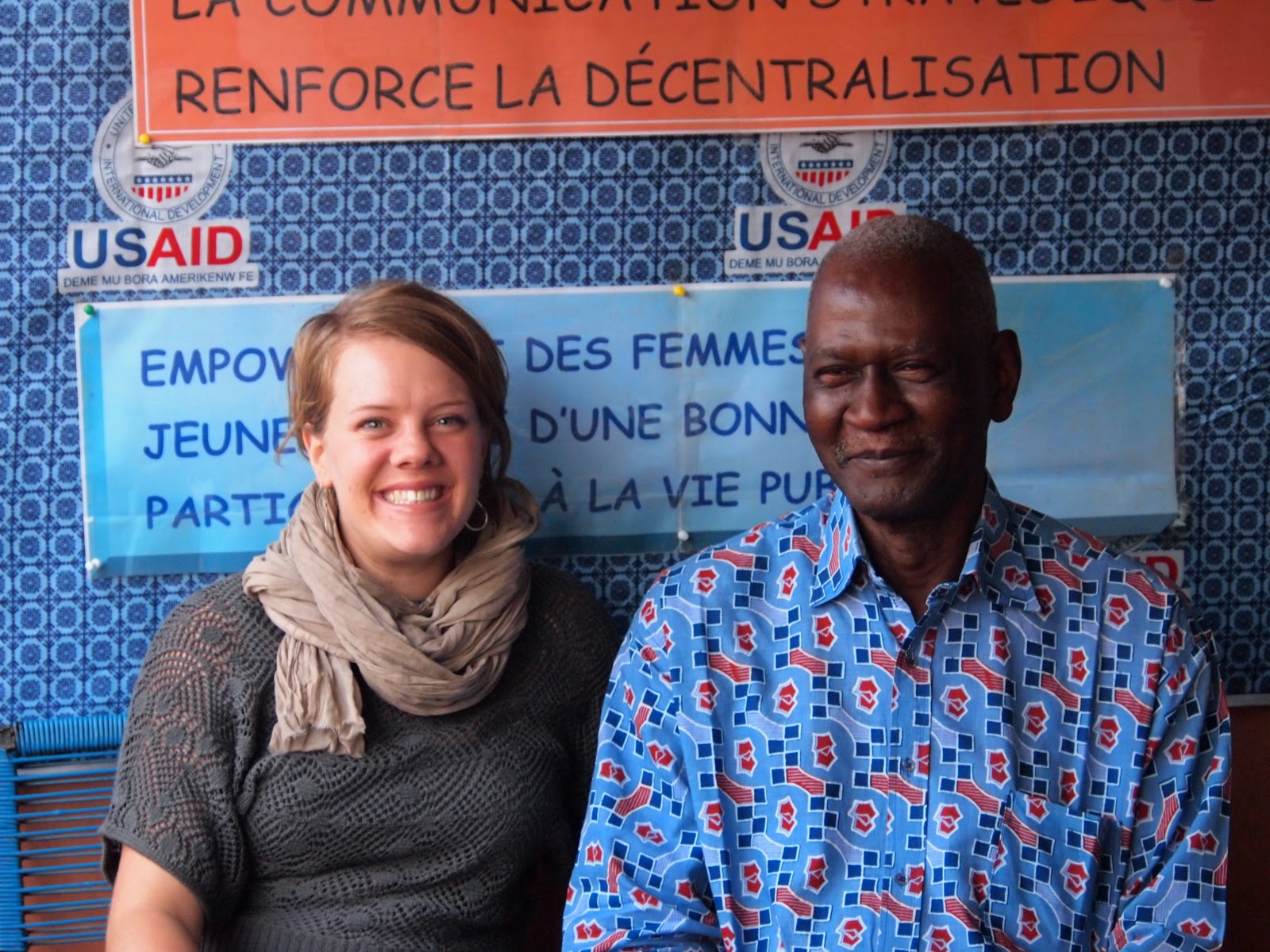
With Mamadou Kanté, Chief-of-Party for Le Programme de Gouvernance Partagée (Program for Shared Governance) who also happens to be the author of the textbooks I used to learn Bambara!

see more pictures i took at the festival here!
*(interactive radio lessons are broadcast on ORTM, the Malian national radio station, Monday-Friday at 10:30 and 11:10 a.m. during the school year)

Friday, January 28, 2011

43 days

I step off the plane and take a deep breath of the smoke-tinged, Bamako night air. It is mid-January, nearing the end of the Malian ‘cold’ season, and the coolness has indeed slipped away since I left a month ago and been replaced by an almost sticky breeze. I collect my bags from the ever-changing luggage carousel and head home with friends waiting for me outside the airport. The next morning I tackle the dusty task of moving back into my apartment left vacant for a month. I unpack clothes, dust tables, clean my refrigerator and handle around town errands like getting money from the bank, restocking my pantry. After shaking the sleep from my bones and cracking the hesitancy out of my Bambara I feel ready to call Malian friends and family to let them know ‘ne gnuman sera’ – that I have made it back safe and sound. Saying goodbye to loved ones can wrench the heart. This trip to Mali I find it can be harder to come back.

Ameriki outfits lie in my closet – the smell of my Mom’s detergent still fresh in their folds. My Malian complets are transformed from an overwhelming mass on a shelf into a tidy row of white plastic hangers, courtesy of America. The kitchen cupboard is filled with American-bought chocolates and alfredo noodles. My phone buzzes and lights up with sweet, welcoming text messages and less than 24 hours back in Mali my weekend is booked with friendly dinner dates, a birthday party and plans to attend a concert downtown. I call Annie and Esayi to share the well-wishes from my family, ask how Jim, the current volunteer, is doing and to talk about an upcoming visit for baby Jean and Christine’s dual baptism. But Esayi’s voice on the other end of the line stops me in my tracks before we finish our greetings; something isn’t right.

After asking about the family’s health Esayi replies the standard ‘torro si té’ – no problems at all. But when I ask specifically about Annie and baby Jean he sighs ‘ehh, Djelika, den ma kenné deh!’ – the baby really isn’t doing well. Annie gets on the line and her voice cracks as she recounts the steady decline in baby Jean’s health since New Year’s. She holds him up to the phone and I hear a soft, sad whimper that clenches my heart. She says they have been to each of the health clinics nearby, multiple times, but to no avail. Baby Jean’s cough will not go away and even though they have given him the prescribed medicine he still will not breastfeed. ‘Mais aw taara San hôpitali la?’ I ask – have you been to the hospital in San? Her voice is weary and her speech strained. There’s no money to go, she says. I groan to myself, if only I had known sooner! I quickly wrap up the conversation and assure Annie and Esayi we will work something out and that I will call back this afternoon. I immediately call Jim and we decide that as soon as he gets back to village that afternoon he’ll give some money, about $40 USD, to Annie and Esayi for a trip to the hospital. I call Esayi and let him know. His voice brightens. We’ll leave in the morning, he says.

In the meantime I call my friend Jean who lives in San and we talk over baby Jean’s situation. I ask him to be my representative tomorrow at the hospital since it is too short notice and too long a bus ride to be there myself and I also know he will lend a sense of authority to their appointment. (hospitals here also operate differently than in the States – if you need food or medication of any kind, you have to provide it yourself or have family members bring it to you) Annie and Esayi will also be nervous to deal with bigger city hospital staff and Jean speaks French so he can serve as a translator in case the (Malian) doctor won’t speak Bambara. The next day Jean calls me with updates and I periodically call Esayi to check in on Annie and the baby. By the end of the day they have received a cocktail menu of medicines and instructions to go back to village to monitor the baby’s status before returning later in the week to San and maybe heading to Segou or Bamako for further treatment. But at 6 p.m. Esayi calls me and the optimistic tone that played in his voice just hours earlier as baby Jean began to breastfeed again is gone. He says baby Jean passed away on the ride home. His little body just could not handle all that was happening. I mumble blessings and sink into my couch as we hang up the phone. This news is not what I was expecting coming home to Mali.

I go to a friend’s house for dinner that night, my mind in a cloud and my heart feeling pulled in more than one direction. I talk to Jim and Jean in San – should I come ASAP to greet or is it better to wait? After discussing my options with those close to my heart I decide it is best – for all parties concerned – if I get back to village as soon as I can. I go through with a dinner party the next night, friends having already been invited; the food already bought. I buy a ticket from the Gana bus station to leave Friday morning at 6 a.m. and after the dishes are washed Thursday night, pack my bags and climb into bed at 2 a.m. with a heavy heart and a pulsing headache.

The ride to San is relatively quick and when I arrive at 1:30 p.m. Jean meets me at the bus station and we eat lunch before I collapse into bed for a much needed nap. The combination of jet-lag, moving back into my apartment, the crushing news of baby Jean’s death and an 8 hour bus ride on Malian public transport has taken it’s toll – though I can only imagine how Annie feels. I wake up that evening and after greeting a few people in San fall once again into a deep slumber – waking up at 11 a.m. Saturday morning.  Jean and I head then out to village to provide what comfort we can to Annie and Esayi.

When I get to village I learn Annie has returned to her hometown, about 3 miles away, to spend two nights with her own mother where she later tells me her mom spent the whole time reassuring her things will be OK and that baby Jean’s death was God’s will. Esayi reassures me she will return tomorrow morning with her family. Her younger brother calls and says the same thing. While I am sad she is not there I also understand she needs to do what she needs to do. I enjoy the opportunity to sit and talk with Esayi and Jim and despite the nagging tug in my heart when I see baby Christine skipping by, a reminder she is once again the youngest child, the evening feels like any other in village. After a macaroni dinner and tepid bucket baths we sit by the fire and welcome visitors who have come to greet. They tease Jim and me about our Bambara and rag on me for staying away so long. Yacouba, Esayi’s younger brother, pours 3 rounds of tea and Batuma and Mama tug on the new puppy that lies curled up by the fire. Cold season breezes replace the warm ones that welcomed me just a few nights before and I snuggle into my shirt and pull my stool closer to the embers.

By 11 p.m. everyone is in bed but Jean and I stay up a little longer as he recounts what happened at the hospital in San. When he saw Annie and Esayi at the hospital, patiently waiting with the number taken from the nurse’s desk, he went to the head doctor and asked him to look at the baby right away and either recommend they wait their turn like the rest or see the baby immediately. The doctor took them right away. While I feared baby Jean had suffered from a very curable cough or cold gone wrong and therefore time was of the essence, it turns out he suffered from failing lungs and a bad heart. Jean urged the doctor to take an X-ray and they found that his lungs and heart were all shifted in his body cavity – and one of his lungs wasn’t even working.  Also, the one lung that was functioning properly was pressing on his heart. Jean said he knew baby Jean was not going to make it when he saw him but that Annie was trembling with panic and Esayi was so worried he couldn’t bring himself to break the fatal news. Neither, apparently, could the doctor who sent them back to village, presumably to let baby Jean pass away at home. Having seen the X-ray I think that even if baby Jean had made it to Bamako, his chances would have been slim to none for survival. I will forever be indebted to Jean for his kindness as he navigated the complicated, user unfriendly hospital system for Annie and Esayi and later explained to me all that happened. If he wasn’t there I am sure we would not know the true reasons behind baby Jean’s death.

The next morning Annie arrives with her family on a horse-drawn cart. The lines around her eyes are more pronounced than ever and her normally small frame disappears under the folds of her colourful complet and white headwrap. I want to be here for her but what comfort can I possibly bring? Seeing her and talking with Esayi has already lifted a weight off my heart but I know the grieving has only just begun. The church bells ring and Jim and Jean stand up to go. I stay with Annie and cuddle with Christine. Annie sweeps her house and then comes to sit outside with me and Esayi. We pass the day in this manner, our conversation ranging from baby Jean’s passing to upcoming shea trainings and cereal bank happenings. I think it helps us all to talk openly like this – to talk not only about baby Jean’s passing but also normal, day-to-day things. At the end of the day I head to market with Jim, baby Christine tied on my back, Batuma and Emma leading the way. Earlier in the day Esayi reminded me the last time I was in village, to visit Annie and one-week old baby Jean in mid-December, it was also a Sunday and also a market day, like today. Market is every 6 days in our village and Esayi lets me know that from one same-day market to the next is 43 days. What a crafty calculation. How quickly life can change. We make the circuit in market greeting cute little old ladies and buying carrots before heading back to the house. Jean nods to me saying it is time to go and also time to share our blessings to Annie and Esayi. ‘Allah ka hiné a la’ (my condolensces) ‘Allah ka yaffa kan ma’ (may God pardon he who passed) ‘Allah ka dah yoro sumaya’ (may God prepare the deceased’s resting place) ‘Allah ka limaniya di I ma’ (may God give you the force to accept what has happened). Annie and Esayi respond ‘Ameena’ and ‘Allah ka doubab miné’ (may God bless you). I ask for the way to San from Annie and Esayi and they escort Jean and me to the road.

The frequency of death in Mali, and Malians’ subsequent reactions, can make it seem like they possess a callous acceptance of God’s will or a resigned response to the circle of life. As with much in life; the answer lies somewhere in the grey. While American and Malian traditions and culture may be different – often vastly so – in death there are many similarities. Family and friends come to offer their condolences. Large amounts of food are cooked and consumed (here, rice and sauce and porridge while in the States we eat a lot of cold cuts). And of course, the encouragement that either 1) the death was God’s will and/or 2) the pain will pass. In these similarities I find comfort. In the new traditions I have learned in Mali (the prescribed blessings, the separation of men and women in mourning and burial, the mourning process) I also find a new solace.

On Monday morning I head to the bus station with Jean and we flag down a Gana bus barrelling down the road with passengers from Mopti. I climb on board and choose a vacant seat on the non-sunny side of the bus and wave goodbye to Jean through the smudged window framed by a ragged, red velour curtain. The orange and grey upholstery of my chair is discoloured by layers of dust and the seat is in a permanent reclined position. I read and nap my way to Bamako and by the time I arrive at our destination, have finished the book I brought along to read. I chose a Christmas present from my own mother to read:‘This Child Will Be Great’ the memoir of a remarkable life by Africa’s first woman president Ellen Johnson Sirleaf who is president of Liberia (not far from Mali in West Africa). The book is incredibly inspirational and by the end of the ride I felt motivated to start graduate school, be a politician, to make a difference! At the end of the book Sirleaf reflects on the decisions she has made and what she would have done differently (it isn’t much). She recounts a story about a time she was put in jail in Liberia for 9 months and muses that: “Whenever I was inclined to feel sorry for myself or afraid I would reflect, ‘Hey! Poor people go through this all the time!’” She then notes “Perhaps this should be part of the proper grooming of leaders: to be put into a position where you suffer what the common person suffers. How else can you really understand what you’re working to do?”

While I do not mean to liken my heartache in Mali over the loss of baby Jean to serving time in a Liberian prison, the development of my own empathy sometimes strikes me in a similar manner (though I would, for once, maybe use less exclamation points than Sirleaf). In my blog posts and conversations with folks about Mali I try to paint a picture of the invigorating and fun side of Mali I see - to show what a rich experience one can have in one of the poorest countries in the world. Afterall, don't we read enough about the tragic things that happen in Africa?  Baby Jean’s passing brings close to home for me, and now, I hope, for you, the true fragility of life here and the helplessness with which parents like Annie and Esayi are faced in such situations. I came back to Mali ready to pick up life where it left off here in December but, only 43 days after visiting Annie and Esayi to celebrate baby Jean’s birth, I returned to mourn baby Jean's passing. 

Friday, January 14, 2011

the little things

As the days rush past me on the blinking faces of smart phones and another month rips away from my desk calendar I begin to wonder what separates my days from one another? What about my life gives me cause for pause?
when I spend time with Lindsay I always have cause for pause - or cause to jump for joy!
I recently returned to my elementary school in Virginia Beach (Red Mill) to deliver a presentation about the time I spent as a Peace Corps Volunteer in Mali to the school's third-graders.* Throughout the presentation the students posed thoughtful questions about my life and work in Mali.  Wasn't I scared? they asked when I said I left home for two years. Wasn't it hard? they asked when I told them I learned a new language. Did you ever get lonely? they asked when I said I lived by myself. As I answered their questions I was reminded of why even though the answers to all those questions are 'yes' – which would normally be cause to turn away and run back to my comfort zone – why lately I don't feel more alive than when I share bits of my life in Mali with interested people who show they care.

I shared with the students stories about traveling by ferry boat on the Niger river on the same route taken by ancient salt traders and Arab scholars on their way to Timbuktu. I told the students how I rode my bike fifteen miles to market each week to get my groceries and sometimes hopped in a horse drawn cart to hitch a ride with my host family. And as I shared these simple moments from my life and fielded engaging questions from the students (who all recently studied ancient Mali), I was struck by the effortless beauty of our interaction. It simply didn't suffice it to say I had a good time as a Peace Corps Volunteer in Mali. I needed, for myself and the students, to make my experience come alive through stories about the little things that happened in my day-to-day that made my time in Mali so special.
 some feet hanging over the Niger river on my ferry-boat cruise with the lovely and talented Cassie
On my way out of Red Mill I stopped to wash my hands in the teacher's restroom. Perched atop a toiletry shelf in the corner of the lavatory was a block of wood no larger than a chalkboard eraser inscribed with the following inspirational quote:
Friendship isn't a big thing. It's a million little things.
Leaving the school I smiled to myself as I considered what separates one of my days from the other. It's not the generalized question-and-answer routine I go through so often when I ask how someone is doing without really waiting to hear the answer.  It's moments like the one shared in the Red Mill library when I share special moments, however small, from my life and I feel like what I'm saying is being valued as much as the responses I'm listening to.  It's when the glow in my eye is more captivating than the glow of a smartphone screen. Because when I appreciate the little things in my life and in those of the people around me– that what gives me cause for pause.


i love all the little and big things about kate's and my friendship
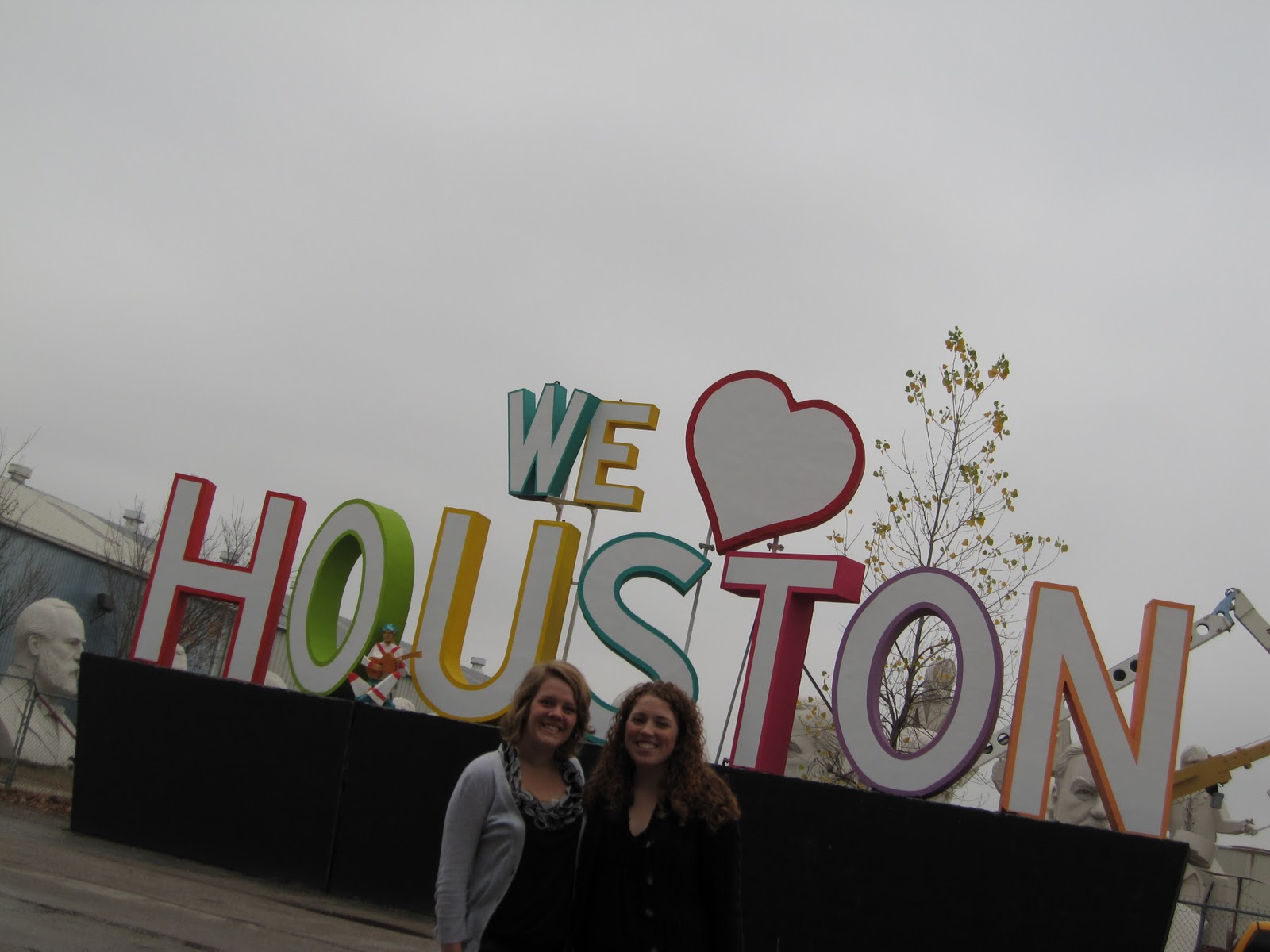
see some pictures of our time in Houston together here


*I still am a Peace Corps Volunteer in Mali but my life has changed quite a bit since moving to the capital in September where I will live until October of 2011

Thursday, January 13, 2011

tired of bamako or news from the US? here's some village for ya


Friday, December 24, 2010

Merry Christmas: A dialogue(s)

A phone conversation this afternoon between my step-dad John in America and my friend Jean in Mali:


[phone rings.  John answers.]

Christmas Eve:

Jean: Est-ce que Jennifer est la?
John: Who is this?
Jean: C'est Jean.  Vous pouvez la dire que je l'ai appelé?
John: I don't speak whatever language you are speaking.
Jean: I do not speak English.
John/Jean: click.

Christmas morning: (Masaran studies English at the university in Bamako)
[6 am. phone rings.  John answers.  Jennifer sleeps]
Masaran (chipper voice): Is Jennifer there!??
John: [grumpy early morning voice]Who is this?
Masaran: It is Masaran!  Is Jennifer there!??
John: [grumpy, doesn't realize phone credit is expensive in Mali] Anne!  Phone for Jennifer! [passes phone to Anne, returns to bed]
Anne: [walks to my room.  climbs into my twin size bed] phone is for you.
Jennifer: Who is it? 
Anne: Someone from Mali. [passes phone]
Jennifer: [holds phone to ear.  line dead.]

[5 seconds later. phone rings.  Jennifer answers]
Jennifer: [very groggy early morning voice] hello?
Masaran: Merry Christmas Jennifer!!!!!
Jennifer: Merry Christmas Masaran!
Masaran:  Just to greet - goodbye!
Jennifer: Bye!

[later in the morning]
John: [normal grumpy voice] Why would anyone call that early?
Jennifer: John, it's hard to remember the time difference when you're in Mali.  Even I call too early sometimes.
John: Well, for Christmas we should get you and your friends a map with the time zones clearly marked.
Jennifer:  Good idea.  Next year.


Nothing like the holidays to bring the world together!   Merry Christmas and Happy New Year!


Tuesday, December 14, 2010

Introducing Jean Morgan Coulibaly dit Papa dit Ce Koroba

On December 4th Esayi called me - excitement palpable even through the phone lines of our choppy connection.  'Annie had the baby!' he said.  I squealed and replied with the requisite blessings for a baby in Mali.  Allah ka den balon.  (May God give the child a long life)  Allah ka na kan dia.  (May God bless the baby's arrival) and so on.  'Can you come to name the baby?' he asked.  I replied immediately with an 'awo!' (yes) as I looked at my calendar.

And so this past Saturday I made my first outside-of-Bamako public transportation trip in nearly 4 months to head back to village and see Annie and her new bundle of joy.  I'd been collecting baby things over the past month in anticipation of Annie's delivery and so I packed up lotions, powders, soap, fabric and baby clothes in my overnight bag and headed to the bus station.  As I bought my ticket and eyed the Gana bus in the parking lot I braced myself for the stifling ride ahead.  Close quarters with screaming children.  Lots of dust and thick, sour air.  But it would all be worth it once I got to see Annie and the baby* - at least that's what I kept telling myself!

Once my bag was safely stowed under the bus and my name called to load, I chose a seat expertly located under an open (and uncovered) vent and opened up a new book - I Was Told There'd Be Cake by Sloane Crosley - and settled in for the journey.  A man carrying a cooler, briefcase and prayer mat gestured to the empty seat next to me and asked if it was taken.   All views of my surroundings were temporarily blocked as I looked up to the voice and saw nothing but folds upon folds of pale blue bazin and embroidery.  I nodded my assent and the blue cloud arranged his affairs and crunched into the seat beside me.  After exchanging pleasantries and some Trident gum we turned to our own bus-ride past times - reading sarcastic short stories (me) and calling relatives in Senegal and speaking loudly in Wolof (him).  Mr. Senegalese man talked with his across-the-aisle neighbor about Bandiagarra (his final destination) and what gifts he could get there.  He decided it would be best to buy his 'samas' here in Bamako and so descended at the outside-Bamako check point to presumably purchase apples, bananas and bread.  He returned, arms overflowing, with bags of apples, bottles of water and his headphones secured in his ears as he shouted more Wolof and laughed loudly.  Once nestled into his seat again he turned to me and gave me a bottle of Diago water and two apples - 'On est compagnons de voyage!' he said when I feebly protested his generous gifts.

On Sunday morning I got up early to head out to village.  The ride out was peaceful as I passed familiar faces and trees and the early morning wind blew cool on my face, in my hair.  I pulled into the Coulibaly compound just after 8 am and spent the day sitting next to Annie, cuddling with Christine and cooing over the baby.  When I talked with Esayi on the phone on December 4th I asked him if he wanted to know the baby's name then.  He said no - that it could wait until I came back to village.  Then, a few days later, he called me and asked me to go ahead and tell him since they were filling out the baby's birth certificate.  After spending a lot of time talking with my family and friends about the baby's name, and trying to pick one that Malians can actually pronounce, I decided on Jean Morgan - the names of my step-Dad and Dad respectively.  Annie liked the names and said Jean Morgan's nick-name would be Papa.  Emma kept calling him ce-koroba (old man) which I am particularly fond of and adopted myself.  At the end of the day my heart and belly were filled with baby yawns and macaroni (respectively) and I left Annie with promises to return in February for Jean Morgan's (and Christine's) baptism.

Monday morning came quickly and I hurried around San greeting familiar faces.  Abu, the tailor, Moulie, the shopkeeper (Bacho was out farming rice), old-man Traoré who runs trucks from San to Gao, the gnomi maker near the BNDA.  'I ni faama!' we'd say and quickly catch up with one another.  No, I didn't move to America.  Yes, I live in Bamako.  How is San?  The family?  The kids?  I told them I'm here to see my 'jatigi-muso' (host-mom) who had her baby.  They would give their blessings and tease me about when I'd be having some of my own!  That's a few trips away I'd say.

And then, after less than 48 hours away from Bamako, I boarded a bus to take me back.  From my spacious seat behind the driver I giggled aloud at Crosley's sassy writing.  I napped uncomfortably against the window pane.  I thought about what this trip to visit Annie and Jean Morgan meant to me and to them.    While in village I saw the house I lived in for two years.  Greeted market vendors and goers at the weekly market and saw the projects and people I worked with on them.  And I came to a mini-realization/mini-reminder.  Sustainable development is a pretty couple of words.  Yet I think the most sustainable developments during the past two years I've spent here as a Peace Corps Volunteer are the relationships with which I've been blessed.  From blue-bazin clouded strangers to surrogate mothers like Annie, friendly acquaintances in market and treasured friends hailing from around the world.  While I enjoy high-yielding outputs and success stories as much as the next person - if these relationships are the indicators by which my time here is marked - I'm feeling pretty sustained. 

Please someone, find me something cuter than a baby yawning.  I dare you!

See more pictures of Jean Morgan, Annie and me here!
*Esayi came to Bamako the day I left for a training with the volunteer who replaced me.  I'll get to see them both for dinner this Thursday before I leave for the States for my one-month home leave


Monday, December 6, 2010

Mission: Sikasso

In October PHARE trained over 280 pedagogical advisors from the 70 teaching academies in Mali on the balanced literacy approach and the use of interactive radio programs in primary schools.  This past week representatives from the PHARE program disbursed throughout the country (though only as far north as Mopti due to insecurity) to monitor the pedagogical advisors as they conducted trainings of over 16,000 primary school teachers.  Oumar, one of the PHARE drivers, Sarré, the leader of the PHARE training team and Bouacar Diabaté, a representative from the Ministry of Education and I had the chance to visit 7 teaching academies in the Sikasso region; here's some of what I saw.


Sikasso équipe (l to r) Diabaté, Sarré, Oumar, me
While the pedagogical advisors deliver the balanced literacy training and instructions on the use of interactive radio shows I sit in the back of the classroom and take notes on the presentations.  I will Sarré to catch my eye and motion my head to convey 'please say what I am thinking so I don't have to.'  The critiques and evaluative comments are not complicated but are at times better delivered Malian to a Malian.  I find myself writing and underlining -  engage, interact, make learning fun!  With the radio sessions the advice is usually to let the radio do the teaching and to not talk over the narrator.  The training in Kolondièba, a gem of a town 60 km off the paved road, takes place in an empty primary school classroom.  Sarré, Diabaté and I observe one of the sessions and discuss the budget with the director of the teaching academy and his accountant before crossing the dusty courtyard to sit in on a 1st grade class.   PHARE programs, as of November 29, are broadcast on the national radio ORTM each day at 10:30 and 11:10 am and so we sit in on this classroom to watch PHARE in action.  

In this row of a building there are three classrooms of normal size filled to an abnormal capacity.  4-5 children crowd into benches made for 2.  70-100 children crowd into a room built for 30-40.  Is this what they mean when they say 'education for all'?  The first grade teacher seems to not notice his classroom is overflowing with children and expresses his sincere pleasure that we can be there to observe the 10:30 radio program.  While he continues to set-up the classroom for the upcoming lesson - alphabet board, song-of-the-day, and radio, I look out at the bright little cherub faces and do a quick bench/student calculation.  With 28 desks and at least 4 kids to a bench I find there are over 100 6-7 year olds in this classroom.  The kids return my interested look and, elbows in each others faces and little legs squished into one another as their tiny sandaled feet swing on their too-high desks, I remember what I am doing here.  I am learning a lot with PHARE - namely how important it is to be passionate about what you do.  Working for and with people so dedicated to their jobs is inspiring and I see how critical it is to be a part of an organization where the end-result matters.  The radio lesson begins on time and it is immediately apparent what a true success this program is.  The children - once doomed to spend 3 years learning the alphabet - will now learn it in under a week, two at the most as evidenced by their grasp of the letters after only a couple days of the program being broadcast.  The teacher who before says he felt unprepared and without the resources to teach now has them.

At the end of each observation Sarré and Diabaté make encouraging remarks about the leaps and bounds being made by the USAID/PHARE program thanks to teachers and the bright future of education in Mali.  I, in an effort to be brief and avoid too much gawking at my Bambara, throw out an 'i ni ce, i ni baara-ji' ('thank you,good work') and wave.  We then welcome questions and comments from the participants.  Oftentimes we hear the complaint that USAID/PHARE doesn't provide batteries for the radios or can USAID/PHARE distribute the snazzy wax-printed fabric Sarré is sporting to all teachers?  USAID/PHARE is a $31 million dollar program.  That is a lot of American tax-payer money funneled into one program for one country.  When these questions inevitably come forth, and even sometimes when they do not, Sarré puts on his serious face and his big-bear voice.  He pulls me over to him and I look at an incredibly interesting spot on the back wall of the classroom.  He tugs my shoulder and says 'Americans care so much about the children of Mali - children they've never met I remind you! - to give their tax-money to programs like this.  I think we can do something to find money for batteries!'  I begin to feel like an arbitrary symbol of Americana as a non-tax-paying (or at least not much) citizen in this room of second-hand NY Yankees caps, Lacoste thrift store shirts and Obama paraphenalia.  I hope the people who sent these things paid their taxes.  Sometimes after Sarré finishes his speech there is an awkward round of applause - his voice erring on the side of theatrical- and sometimes I just continue to stare at the back of the wall.  I put a smile on my face that says 'I-don't-attach-strings-to-this-money, I'm-just-here-because-I-like-your-country-and-living-in-Bamako' and say a silent thank you that the speech is over.  After all, I've only ever paid enough taxes in my life to fund one of these training's pause-cafés.

Sarré with students in one of the classrooms we observed

The teaching academies, all constructed from the same blue-print as far as I can tell, have small overnight rooms tucked into the front of their compounds for teaching-related guests to stay.  Each afternoon we check the rooms where we spent the night before to make sure we've collected all our belongings and then we pack them into Oumar's truck.  I settle into my unofficial seat behind Sarré, passenger side, and try to find a comfortable position.  Diabaté gets in next to me and immediately pulls his radio the size of a Penguin classic book out of his boubou while Oumar flips the tape in the deck.  Diabaté draws the radio close to his ear and tunes it to a station playing anything concerning the recent elections in the Ivory Coast.   Usually a heated debate ensues about the better candidate - Diabité is for Allasane Ouattara in the South and Sarré is a staunch Gbagbo supporter*.  Oumar makes a joke that he's going to take the off-roads and laughs at himself.   An unfortunate trip out to one of the multi-age classrooms down a long, bumpy road early on in my time with PHARE resulted in an unplanned rest stop when I got sick inside the car.  Oumar still thinks it is funny.  I laugh with him not because I think my tendency towards car sickness is humorous but because I like the way he recalls details and people and that I am already a part of his memories.

I readjust in my seat as the road bends in an effort to avoid the harsh sun reflecting through the window and onto my skin.  We pass groups of Chinese and Malian men in sun hats standing in the shade of tractors on the road.  Every 200 meters there's a detour as heavy construction continues on this vital commerce trail connecting Mali to the Ivory Coast - and a port to the Atlantic Ocean.  The dust kicked up by 18 wheelers on the detours make the trees, shrubbery and high-grass lining the off-roads appear as though they have been dipped in a sepia setting.  Just beyond, the crisp blueness of the sky draws a sharp contrast with the green mango-tree leaves left untouched by the red-dirt that finds a way into the folds of our clothes, the creases in our skin.  The smell of diesel exhaust sucks into the car as Diabaté rolls down the window and 'Whooosh!' yet another plastic bag gasps out the window.  I turn back my head to see where it lands.  The wind catches it up, up, up and I see the shiny black plastic rain cloud in the otherwise cloud-less, clear, blue sky, catch on the branches of a tree.   

In Sikasso Oumar unloads three chickens from the roof - a gift from one of Sarré's nephews in Yanfolila - and hands them over to the guard's wife to cook for dinner.  I sleepily drag my tote bag √inside and set up my mosquito tent in my 8x8 ft cinder block room.  Students from the Institut de Formation de Maitres (IFM) where we are staying call to one another and their voices waft through my screened window, mixing with other noises from the city.  Motorcycles, metal spoons striking metal pans and the bass from loud speakers all become a chorus - their sounds harmonizing to the the tune of a small, Malian town.  After dinner Oumar cuts into a watermelon bought this afternoon on the side of the road - one of hundreds spilling out from a road-side stand.  He calls me outside to pick a slice and through the screened door I follow his voice and the lingering smell of fresh, cold watermelon in the air.  I sink my teeth into the crisp flesh of the melon, juice running down my chin and onto my t-shirt.   I just hung up the phone  with my mom who says it is close to 20 degrees Fahrenheit in Virginia Beach.  I look up at the moonless sky hanging above me and shiver.


See more pictures from the trip here!


*Gbagbo, the incumbent, declared his victory while the international community cries out for the validation of the real winner, Ouattara. 


Wednesday, November 24, 2010

Christo and Jeanne-Claude in Bamako???

The Gates - Central Park, New York City, 1979-2005.  Christo and Jeanne-Claude
 
 Bazin - Steets of Bamako, Bamako, 2010.  

walking the streets of bamako
i hear
flapping fabric asking to move slow.
crisp, dyed, fresh on the line.
bazin for the taking - none of it mine.
vibrant purples, oranges, amber and gold.
barika b'a la? i'll take it - i'm sold

 Bazin - Steets of Bamako, Bamako, 2010. 
Bazin - Steets of Bamako, Bamako, 2010.  
Related Posts Plugin for WordPress, Blogger...

Add this!